

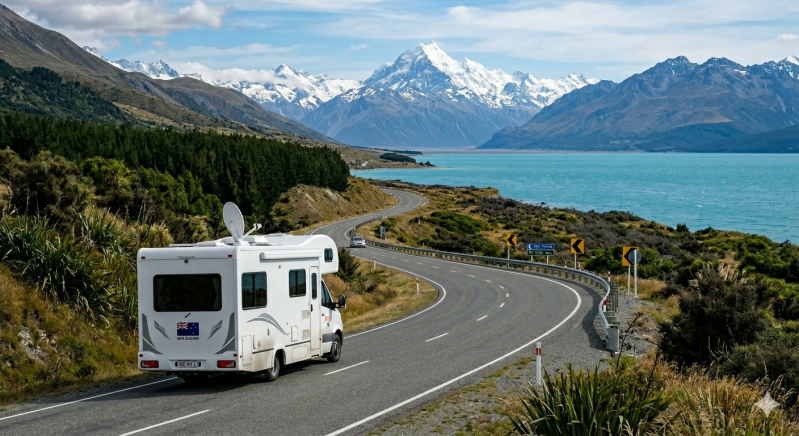
Explore New Zealand by RV
Planning a road trip around New Zealand? Discover the ultimate freedom of Recreational Vehicle and Motorhome travel around Aotearoa New Zealand with RV Adventures New Zealand.
- We aim to provide a no-noncence guide to get you on the road.
- We provide a comprehensive comparison of RV and Motorhome rental providers.
- We compaire Motorhome and Recreational Vehicle sellers and essential buying tips to help you buy the perfect van.
We will show you who to contact, including wesite links, to allow you to plan your trip and access travel guides. We also include driving tips for traveling New Zealand's roads and a quick rundown on legal requirements and drivers licenceing. If you are planning a road trip around New Zealand Aotearoa this is the site for you.
Your guide to RV travel in New Zealand
At RV Adventures New Zealand, we aim to be your go-to resource for everything related to RV travel in this beautiful country. Whether you're looking to rent for a short holiday, planning an extended journey, or considering purchasing your own RV, our website offers invaluable insights and comparisons to make your experience smooth and enjoyable. We partner with various providers to bring you the best deals and information, helping you save time and money.

Our expert resources
We offer a range of resources designed to assist you at every stage of your RV journey in New Zealand. From choosing the right rental to navigating the best routes, we've got you covered.

RV rental comparisons
Easily compare different RV rental providers across New Zealand. Find the best rates, vehicle types, and amenities to suit your travel style and budget.

Comprehensive travel guides
We have researched links and organisation that can help customize your route planning. We offer tips for navigating New Zealand's diverse landscapes by RV.

RV buying tips
Considering purchasing an RV? Our expert advice and tips will help you make an informed decision, from choosing the right model to understanding maintenance.

Whangamomina, road to nowhere, has RV sites.
Frequently asked questions
Have questions about RV travel in New Zealand? Our comprehensive FAQ section covers everything you need to know before you hit the road.
The Golden Choice: Fully Self-Contained vs. Non-Self-Contained
| Feature / Factor | Fully Self-Contained Vehicle (Certified) | Non-Self-Contained Campervan |
|---|---|---|
| What it means | Must feature an onboard toilet, fresh water storage, and a greywater holding tank that can last at least 3 days. | Typically smaller, budget-friendly vans. May have a portable sink but no permanently fixed toilet or wastewater holding facilities. |
| Freedom Camping Access | High Access. Legally permitted to park for free on designated public conservation (DOC) lands and council regions across NZ. | Very Restricted. Banned from most free public sites. You are legally required to stay in commercial holiday parks or low-cost sites with toilets. |
| Pros | Ultimate freedom, access to remote and beautiful free campsites, more interior space, hot showers, and home comforts. | Cheaper daily hire/purchase rates, significantly better fuel economy, much easier to drive and park on tight, winding Kiwi roads. |
| Cons | Higher initial hire or purchase cost, larger footprint to navigate on tight corners, requires regular visits to dump stations. | Highly restricted camping choices, requires relying entirely on external, public bathroom and cooking facilities. |
On the Road: Drivers Licences, Insurance & Rental Rules
Drivers Licences
You can legally drive a motorhome in New Zealand on your standard car driver's licence provided the vehicle’s Gross Vehicle Mass (GVM) does not exceed 6,000kg (which covers almost all 2 to 6-berth rental motorhomes).
- Important Note for Overseas Tourists: If your home country's licence is not entirely in English, you must carry an official, accurate English translation or an International Driving Permit (IDP) alongside your national licence at all times. You can drive on an overseas licence for up to 12 months after which you must obtain a New Zealand licence. You may be resticted to 4500kg vehicles in certain curcumstances. Please check with your travel agent or hire company before booking. Legal Requirements
- NZ Transport Agency (NZTA): Check licensing frameworks, weight thresholds, road user charges (RUC) for diesel vehicles, and vehicle safety standards.NZ. https://www.nzta.govt.nz/NZ
- Self-Containment Regulations: Official guidelines regarding what constitutes a legal self-contained vehicle under the updated legislation. Visit Plumbers, Gasfitters and Drainlayers Board (PGDB) Website
Understanding "Berths": In New Zealand, the number of berths equals the number of seatbelts and legal sleeping spots. However, a 4-berth motorhome is usually perfect for two adults who want extra breathing room and a permanent bed without converting the dining table every night. Insurance Cover & The "Excess"
All major hire companies include a basic level of insurance in their daily rate, but it comes with a high financial catch. The standard insurance "excess" (the amount you pay out of pocket if you scratch, dent, or crash the vehicle) usually ranges between NZD $5,000 and $8,000. (2026)
- The Solution: Hire companies offer a daily "Stress-Free" or "All-Inclusive" reduction package (usually an extra $30 to $60 per day (2026)). This drops your excess bond down to $0 and often covers tricky damages like windscreen stone chips and tire punctures. For peace of mind on gravel roads, this upgrade is highly recommended.
- Purchasing: If you are buying an RV please get insurance. Third party is a minimum, full cover is better. Driving on New Zealand roads without it is a big risk not worth taking. Ask about glass insurance (usually one free windscreen per year) and contents insurance.
Strict Rental Company Rules
Rental operators have firm policies to protect their fleets from New Zealand's unique geography:
- Prohibited Roads: You are strictly forbidden from driving on specific unsealed or dangerous routes. Common banned areas include 90 Mile Beach (Northland), the Skippers Canyon Road (Queenstown), and the Tasman Valley Road (beyond Mount Cook Village). Driving on these invalidates all insurance.
- The Interisland Ferry Link: Most companies allow you to take the vehicle between the North and South Islands on the ferry, but you must book your ferry space well in advance, especially during the peak summer window (December to February).
- Minimum Hire Periods: During peak summer seasons, rental companies usually enforce a strict minimum hire period of 10 to 14 consecutive days.
Non-Self-Contained (Standard Campervan)
These are typically smaller sleeper vans, older conversions, or roof-tent cars that do not have built-in plumbed wastewater or fixed toilet systems.
- Pros: Highly economical to rent/buy, incredibly easy to drive and park in standard town parking spaces, and very fuel-efficient.
- Cons: Strictly banned from freedom camping in almost all areas. You are legally required to sleep at established holiday parks or specific DOC campgrounds with toilet facilities every single night. Fines for illegal freedom camping start at $400. (2026)
Inspiring your next adventure
Imagine waking up to breathtaking views of Milford Sound, the Southern Alps, or sitting under a Pohutakawa Tree on one of New Zealand best North Island beaches. RV travel offers unparalleled freedom to discover these wonders at your own pace. Let us help you turn that dream into a reality.
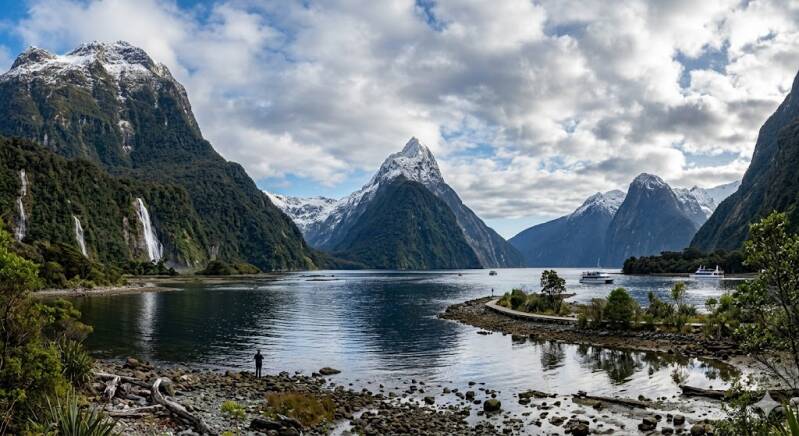
Milford Sound
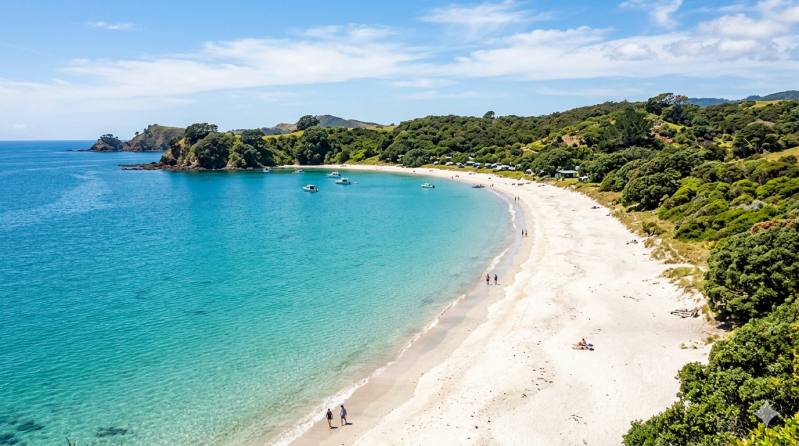
One of New Zealands Best Beaches - Matai Bay, Cape Karikari, Far North
A cautionary tale
The Story of the Little White Camper

Somewhere in Aotearoa New Zealand, right now, there is a little white camper van like this one traveling around the country with possibly a French, or other nationality, couple on board. They own the little van but will sell it just before they leave, possobly on facebook market place or elseware. I met these people at the Hohora motorcamp. They do exist and they were having a great time. They will sell cheap as they bought cheap and they want the next group to enjoy what they experienced.
However it is the resposibility of the new owner to ensure the vehicle is safe, has been services, has third party insurance and has a current Warrent of Fitness and Registration (yea right). This is not for everyone and things can go badly wrong. Great fun untill something happens. No insurance in case of an accident, potential breakdowns, flat tyres and the risk of being fined or moved on for freedom camping in a non self contained van.
For the rest of us, go to the RV rental or seller comparison sections on this website. Explore what they have to offer and how they can contribute to you enjoying the experiance.
Explore our resources and embark on a stress free and unforgetable journey.
"As a first-time RV renter, I felt so much more confident after reading their tips. Highly recommend this site!"
— John T. Christchurch